The In-App Advertising Revolution: Navigating DSPs, SSPs & Ad Exchanges
The landscape of digital marketing has been irrevocably reshaped by mobile applications. What began as a convenience has transformed into a dominant force in daily life, entertainment, and commerce, propelling the in-app advertising sector to an impressive 16% annual growth. This surge isn't just a fleeting trend; it reflects a profound shift in consumer behavior, where smartphones are increasingly the primary gateway to information and engagement.
For businesses, this evolution signals a clear imperative: an effective in app advertising network strategy is not merely an option but an indispensable tool for reaching today's mobile-first consumers. But what exactly powers this intricate ecosystem? Beyond the flashy banners and interactive videos lies a sophisticated infrastructure comprising various technological platforms working in concert. Understanding these components—especially Demand-Side Platforms (DSPs), Supply-Side Platforms (SSPs), and Ad Exchanges—is crucial for both advertisers seeking maximum ROI and publishers aiming for optimal monetization.
What is In-App Advertising and Why Does It Matter?
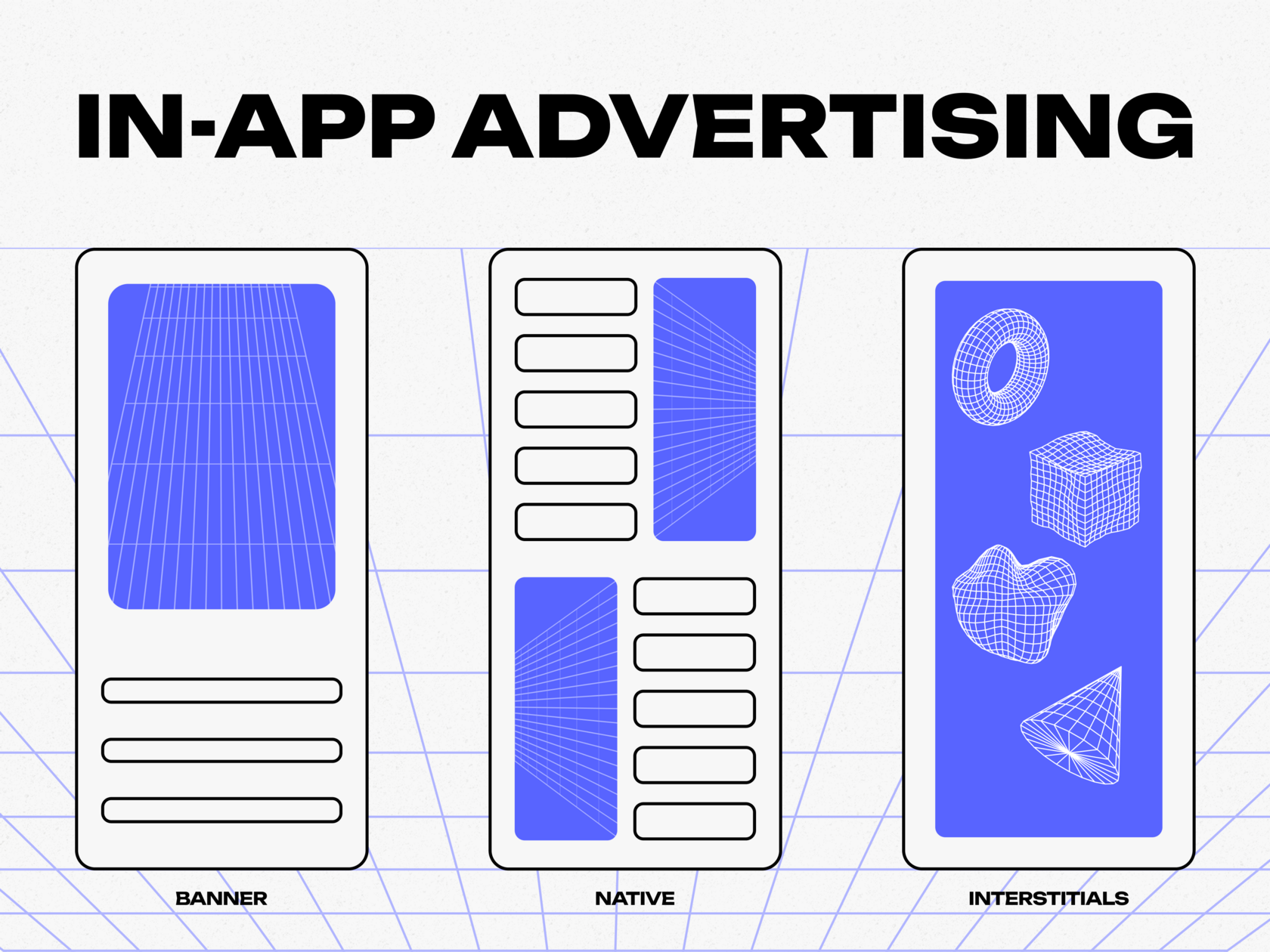
At its heart, in-app advertising is a mobile marketing strategy that delivers advertisements directly within mobile applications. Unlike traditional web-based ads that users might encounter in a browser, in-app ads meet consumers precisely where they spend their time, often in highly engaged states. App developers seamlessly integrate these ads using a variety of formats—from static banners and full-screen interstitials to interactive playable ads and rewarding video experiences.
This approach offers a compelling value proposition for all parties involved:
- For Publishers (App Developers): In-app ads provide a vital, sustainable revenue stream for free-to-download applications. This allows developers to offer their content without an upfront cost, attracting a wider user base while still generating income. It's a smart monetization strategy that keeps apps accessible and profitable.
- For Advertisers: The real power for advertisers lies in reaching highly engaged audiences within their favorite apps. Instead of hoping users stumble upon ads on a crowded web page, in-app advertising places messages directly in front of an attentive, often captive, audience. This leads to higher engagement rates and, ultimately, better returns on ad spend.
- For Users: When implemented thoughtfully, in-app ads can even enhance the user experience by offering rewards (like in-game currency for watching a video) or providing relevant content that aligns with their interests.
The beauty of in-app advertising lies in its ability to transform user attention into a valuable commodity, creating a symbiotic relationship between content creators and marketers.
The In-App Advertising Ecosystem: Key Players Unveiled
The display of an ad within your favorite game or utility app is the culmination of a complex, real-time negotiation involving multiple sophisticated platforms. Let's break down the core components that form the backbone of the in app advertising network:
Ad Networks: The Connectors
Historically, ad networks served as the primary brokers in the mobile advertising world. They connect app developers (publishers) who have ad space to sell with advertisers who want to promote their products or services. These networks aggregate ad inventory from numerous publishers and offer it to advertisers, often categorizing it by audience, app type, or geography. While still relevant, their role has evolved with the rise of more automated and programmatic platforms.
The Buy Side: Advertisers & DSPs
On the "buy side" of the ecosystem are the advertisers and their agencies. Their goal is to acquire ad space that effectively reaches their target audience. To do this efficiently, they rely heavily on specialized technology:
- Demand-Side Platform (DSP): A DSP is a powerful software platform that allows advertisers to manage, optimize, and purchase ad inventory from various sources (ad exchanges, SSPs, ad networks) automatically and in real-time. DSPs give advertisers unparalleled control over their campaigns, enabling them to:
- Target Precisely: Leverage vast amounts of data (demographics, location, app usage, behavior, device type) to pinpoint specific user segments for their ads.
- Automate Bidding: Set bidding strategies and budgets, allowing the DSP to automatically bid on relevant ad impressions that meet their criteria.
- Optimize Campaigns: Monitor performance metrics in real-time, making adjustments to creatives, targeting, and bids to maximize ROI.
- Access Diverse Inventory: Connect to a wide array of ad sources, ensuring they can find the most suitable ad placements.
The Sell Side: Publishers & SSPs
On the "sell side" are the app developers (publishers) who offer their ad space (inventory) for sale. Their objective is to maximize the revenue generated from their app's ad slots while maintaining a positive user experience. They achieve this primarily through:
- Supply-Side Platform (SSP): An SSP is a technology platform used by publishers to manage and sell their ad inventory to advertisers, DSPs, and ad networks programmatically. SSPs are designed to optimize a publisher's yield (revenue) by:
- Connecting to Multiple Buyers: Link publishers to various ad exchanges, DSPs, and ad networks simultaneously, creating a competitive bidding environment for their ad space.
- Setting Price Floors: Allow publishers to set minimum prices (price floors) for their ad impressions, ensuring they don't sell their inventory below a certain value.
- Inventory Management: Control which types of ads are shown, filter out undesirable content, and manage ad refresh rates.
- Yield Optimization: Automate the process of finding the highest bidder for each ad impression, maximizing overall revenue.
Ad Exchanges: The Digital Marketplace
At the center of programmatic advertising, facilitating transactions between DSPs and SSPs, is the Ad Exchange. Think of it as a high-speed, digital marketplace where advertisers (through their DSPs) can bid for ad space offered by publishers (through their SSPs) in real-time. Ad exchanges provide a transparent and efficient environment for buying and selling ad impressions. They enable:
- Real-Time Bidding (RTB): The core mechanism of ad exchanges, allowing bids to occur instantaneously as an ad impression becomes available.
- Transparency: Provide a clear view of available inventory and the prices being paid.
- Efficiency: Automate the entire ad transaction process, eliminating manual negotiations and significantly speeding up the delivery of ads.
An ad exchange is the neutral ground where supply meets demand, driven by the power of programmatic technology.
How In-App Advertising Works: The Real-Time Bidding (RTB) Mechanism
Understanding the interplay between DSPs, SSPs, and Ad Exchanges is best illustrated by following the journey of an ad request in a Real-Time Bidding (RTB) scenario:
- User Opens App & Ad Space Becomes Available: A user launches a mobile app, and a moment arises where an ad can be displayed (e.g., between levels in a game, at a natural break point).
- App Sends Ad Request to SSP: The app's SDK (Software Development Kit) sends an ad request to its integrated SSP. This request contains crucial information about the user (anonymized location, device type, app context, etc.) and the ad slot characteristics.
- SSP Solicits Bids via Ad Exchange: The SSP receives the request and, aiming to find the highest bidder, forwards it (or relevant subsets) to multiple connected Ad Exchanges. The Ad Exchange, in turn, broadcasts this "bid request" to numerous DSPs it's connected with.
- DSPs Evaluate & Bid: Each DSP receives the bid request and rapidly evaluates it against its advertisers' campaign criteria (targeting parameters, budget, bidding strategy). If a match is found, the DSP calculates a bid amount based on the perceived value of that specific impression for its advertiser.
- Ad Exchange Selects Winner: All bids are sent back to the Ad Exchange. The Ad Exchange quickly processes these bids and determines the winner (typically the highest bidder, often paying just above the second-highest bid, known as a "second-price auction").
- Ad Delivered to App: The winning bid's creative (the actual ad) is sent from the DSP, through the SSP, and finally to the user's mobile app, where it is displayed almost instantaneously.
This entire process, from ad request to display, typically occurs within milliseconds, providing a seamless and personalized experience for the user and an efficient transaction for buyers and sellers.
Maximizing Your In-App Advertising Strategy: Tips for Success
Leveraging the power of an in app advertising network requires more than just understanding the technology; it demands strategic implementation. For a deeper dive into optimizing your mobile monetization efforts, be sure to explore The Ultimate Guide to In-App Advertising & Mobile Monetization.
Tips for Advertisers (Leveraging DSPs):
- Refine Your Targeting: Don't just target broadly. Use your DSP's advanced capabilities to pinpoint specific demographics, interests, app usage patterns, and geographic locations that align precisely with your ideal customer profile. The more precise your targeting, the higher your ROI.
- Optimize Creatives for Mobile: Mobile users have different consumption habits. Design ads that are visually appealing, concise, and offer a clear call to action, tailored to small screens and quick interactions. A/B test different creatives to see what resonates best.
- Embrace Diverse Ad Formats: Experiment with rewarded video, interactive interstitials, and native ads. Rewarded video, for instance, often boasts high completion rates because it provides value to the user.
- Monitor & Analyze Performance: Continuously track key metrics like click-through rates (CTR), conversion rates, and return on ad spend (ROAS). Use these insights to optimize your campaigns in real-time via your DSP.
- Prioritize User Experience: Avoid intrusive or disruptive ad placements. A positive user experience is crucial for long-term engagement and brand perception.
Tips for Publishers (Optimizing with SSPs):
- Implement Mediation Platforms: Use a mediation platform to integrate multiple ad networks, SSPs, and ad exchanges. This ensures maximum competition for your ad impressions, driving up your eCPM (effective Cost Per Mille).
- Balance Monetization with UX: While revenue is important, never sacrifice user experience. Excessive ads, poorly placed ads, or irrelevant ads can lead to user churn. Find the sweet spot.
- Segment Your Inventory: Differentiate your ad inventory. High-value placements (e.g., rewarded video, native in a premium app) can command higher prices. Use your SSP to create distinct ad units and set different price floors.
- Combat Ad Fraud: Partner with reputable SSPs and ad networks that employ robust fraud detection measures. Ad fraud can significantly impact your revenue and advertiser trust.
- Stay Informed on Ad Formats: Keep up with the latest ad formats and best practices. Experiment to see which formats perform best within your app without alienating users.
Conclusion
The intricate world of in app advertising network technologies, encompassing DSPs, SSPs, and Ad Exchanges, is a testament to the sophistication driving today's mobile economy. For advertisers, these platforms offer unparalleled precision in reaching engaged audiences. For publishers, they provide robust tools for monetizing their valuable app real estate effectively. By understanding how these components interact and by implementing best practices, businesses can not only navigate this dynamic ecosystem but thrive within it, capturing the attention and loyalty of the ever-growing mobile audience.